
The sound of the foghorn rings out every two minutes as the Northern Seawolf navigates the Broughton Archipelago in the early morning dim. We are on our way from Port Hardy on the northern part of Vancouver Island to Bella Coola, a remote(ish) outpost on BC’s central coast. We’ve been promised whales on this trip by everyone in the know, but two hours into our journey we are still blanketed in thick fog. Although it is only mid-July, locals call this time of the year “Fogust”. I see a bit of blue sky though, and the occasional glimpse of land, so I’m hoping the fog will life a little later in the day. It’s a 10-hour journey through open ocean and fjords, which promises amazing scenery and diverse wildlife, so, fingers crossed!
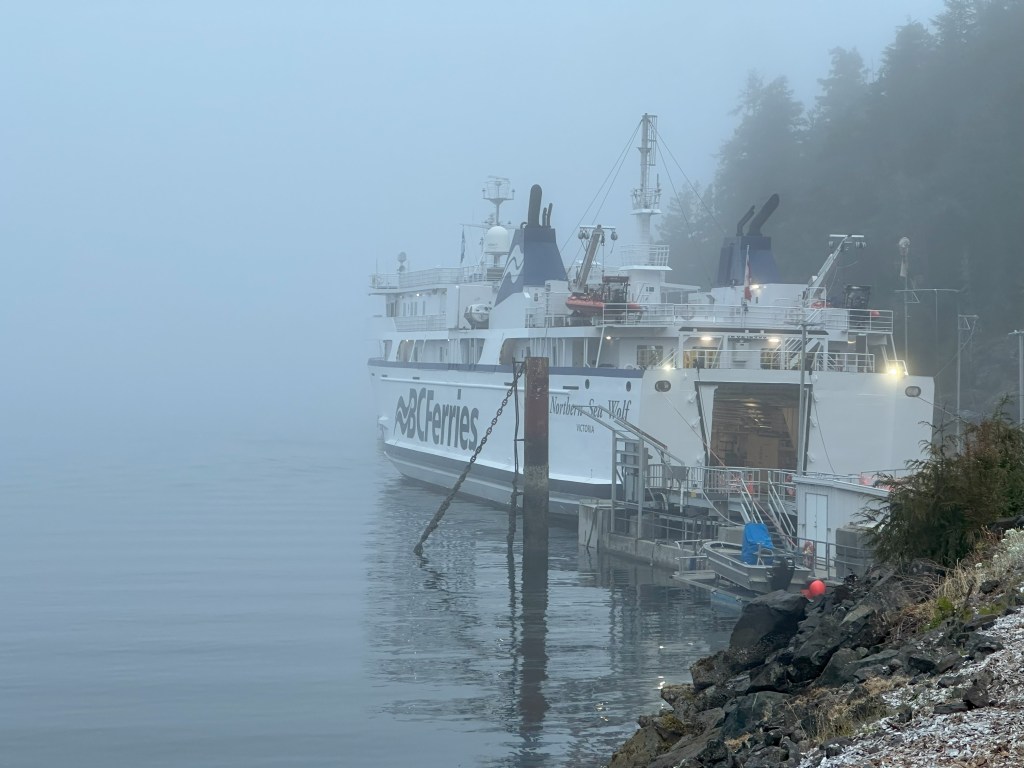
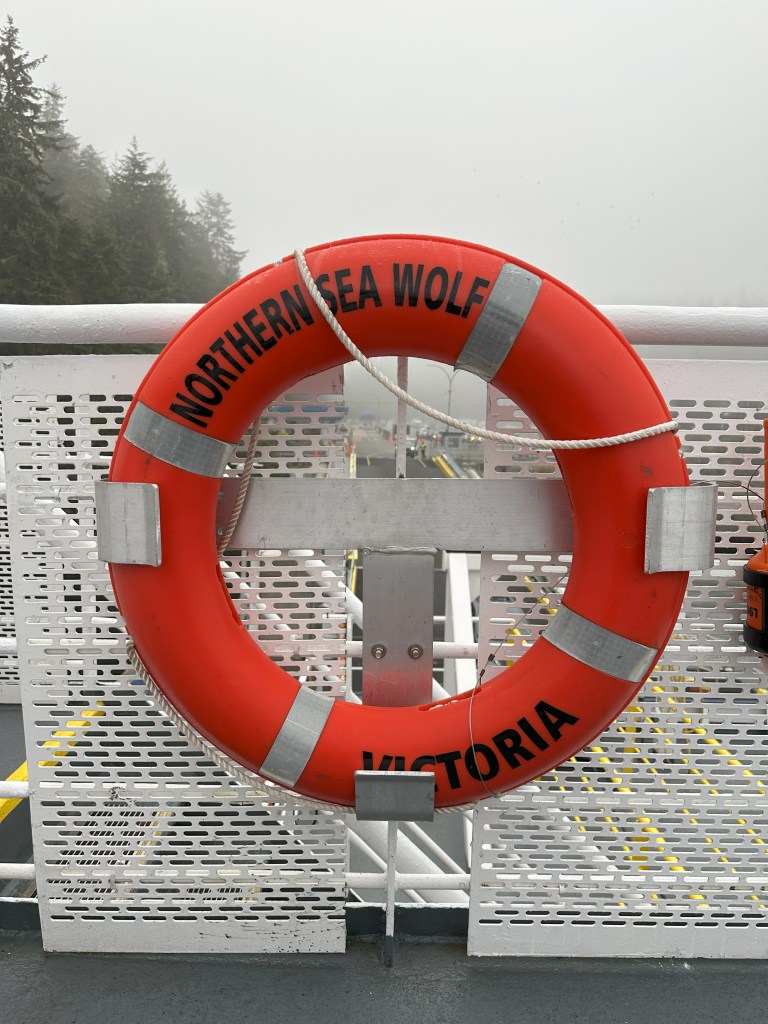
11 am and the fog has burned off. The captain announces “whales, port side” so the entire passenger contingent, plus some of the crew, head outside to watch the show. Two Humpback Whales are breaching and slapping their tales. They look like they are almost on land, but the coastlines drop steeply off into the ocean, which is over 1000 feet deep through here. This is a land of fjords – deep valleys carved by glaciers during the Pleistocene and subsequently drowned by rising seas as the continental glaciers melted at the end of the last ice age.
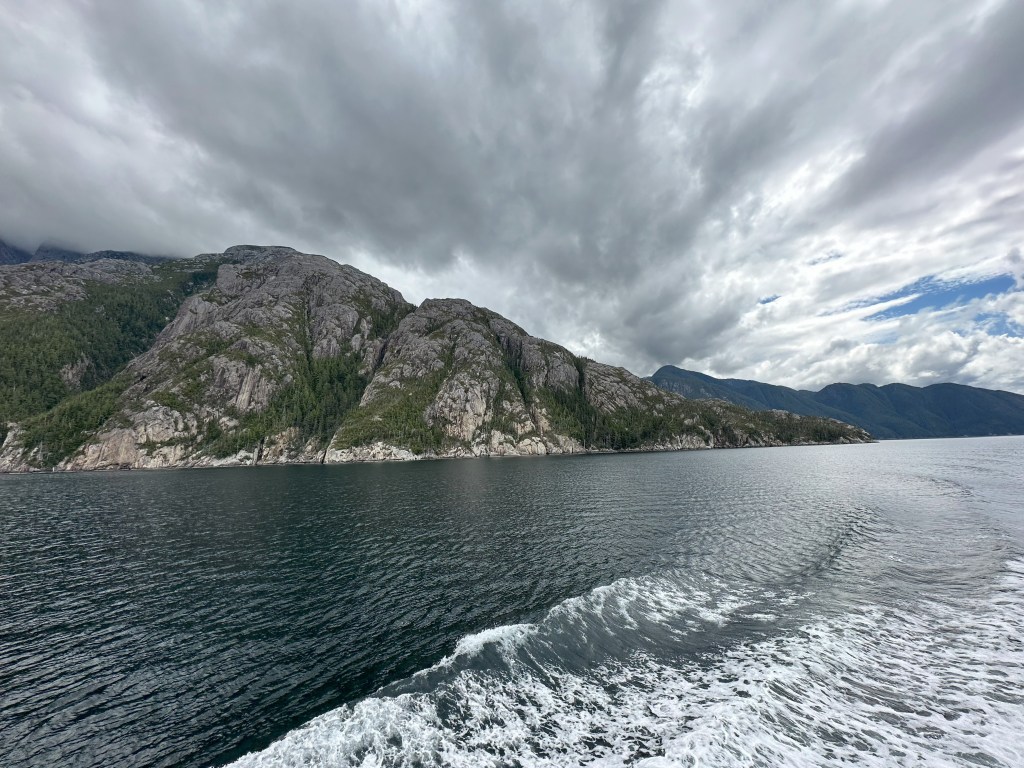
As we pass Kelpie Point at the northern tip of Hecate Island, we again spy whales, Orcas this time. This region appears full of whales, although this hasn’t always been the case. Commercial whaling in BC catastrophically depleted the populations of many whale species, primarily Grey Whales and North Pacific Right Whales, although Sei, Blue, Fin, Humpback and Sperm Whales were also hunted. In the hundred years prior to 1967, when a worldwide moratorium on whale hunting was imposed by the International Whaling Commission, over 24,000 whales had been killed in BC waters. Few species recovered, and most are considered endangered or critically endangered (BC Cetaceans Sighting Netword, n.d.).
We pass by the now extinct community of Namu, a Heiltsuk First Nations word that means “place of high winds” or “whirlwind”. Pre-contact, Namu was a First Nations village with a history extending back at least 8,000 years. Colonialism brought fishing and the establishment of a cannery, followed by logging. A fire in the 1960’s, coupled with a decline in fish stocks and the fishing industry, put an end to habitation at Namu.
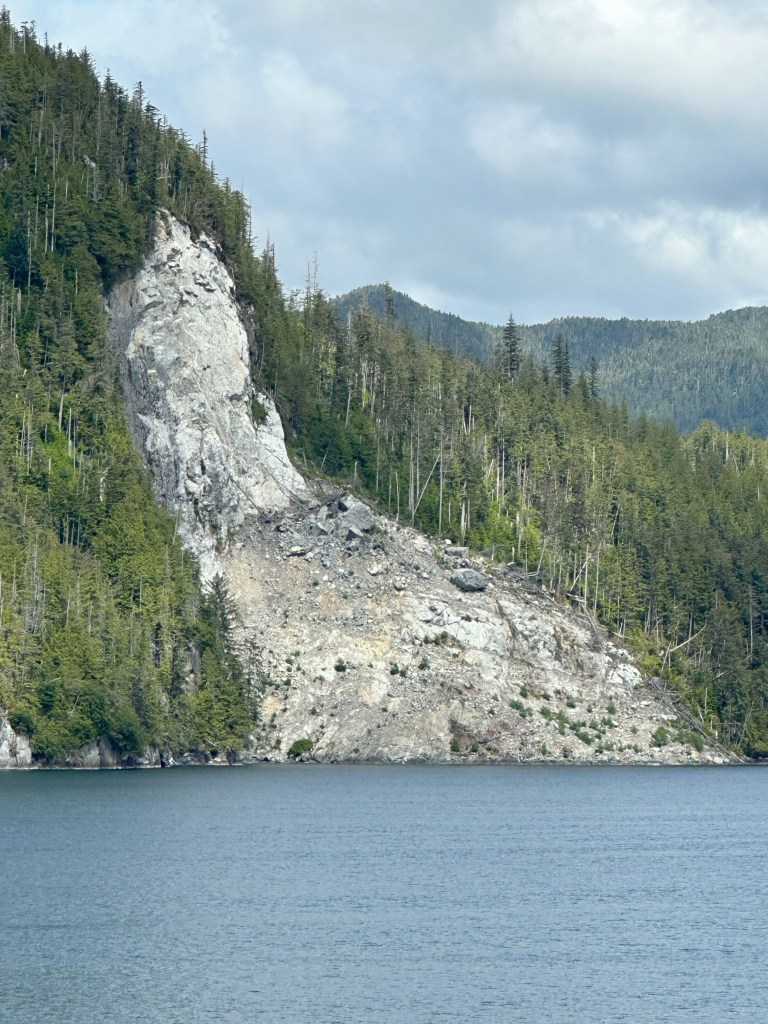
The ocean appears to close behind us as we leave the Queen Charlotte Sound and navigate the twisty channels of Burke Channel. Such is the nature of fjords. The hills are steep and deeply incised with channels and rock falls. Old landslide scars are evident by the different vegetation. Lime green poplars starkly contrast with the darker green of the coniferous forest. Young scars are raw and light brown exposing rock and soil that has not yet been revegetated. This steep, rugged landscape represents young topography resulting from the rapid uplift of the Coast Mountains.
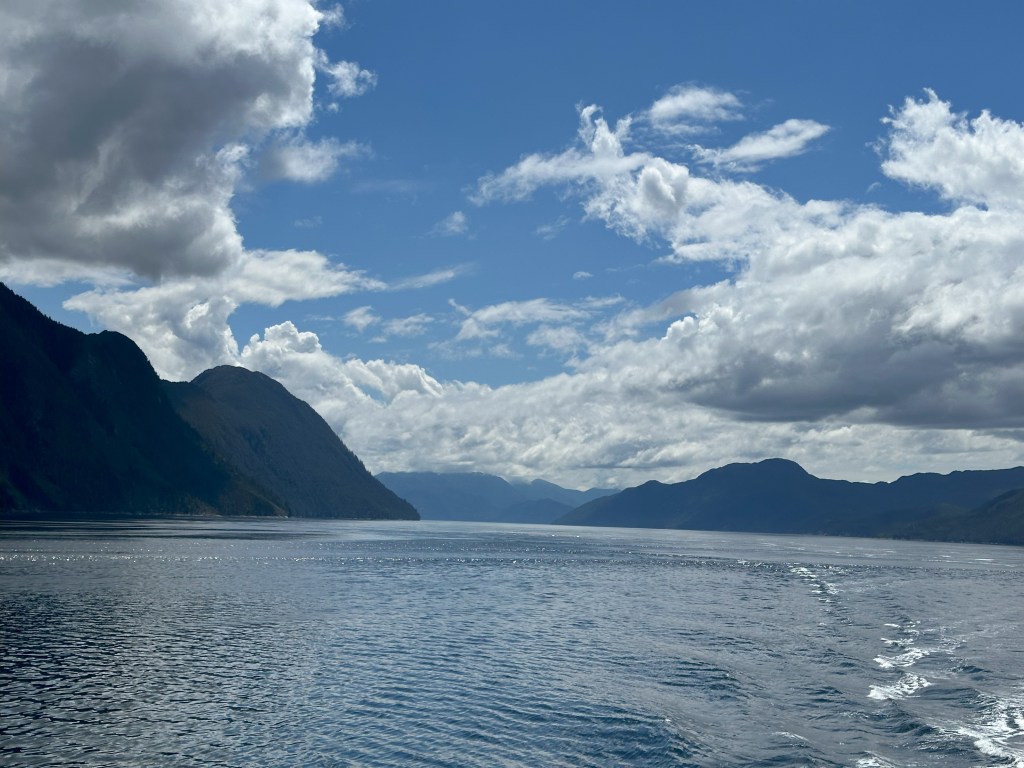
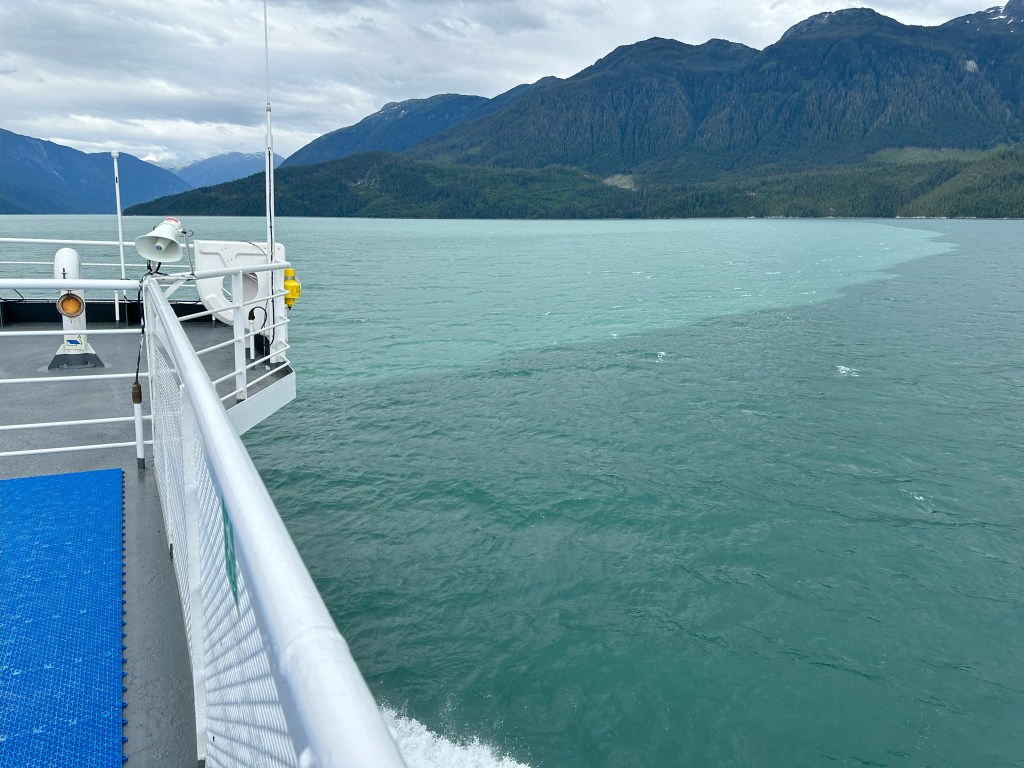
As we turn east into Bentinck Channel in the final hour to Bella Coola there is a distinct demarcation in the water colour. The deep navy of the ocean water makes way to a tropical turquoise indicating the presence of glacial flour in the water. These sounds are brackish, and as we proceed further inland the ocean salinity decreases, reflecting an increased contribution from glacial meltwater streams. The colour changes again to a light opaque blue as we near the dock. In the distance we see small glaciers near the tops of jagged peaks, likely remnants of much larger glaciers diminishing rapidly in the face of climate change. We drive off the ferry and contemplate the next part of our journey – the Chilcoten Highway and the treacherous Heckman Pass.
References
BC Cetaceans Sighting Netword. (n.d.). Whaling. Retrieved from Wild Whales: https://wildwhales.org/threats/whaling/
 Earth Research